Buying on Clearwater Beach can feel simple until one detail changes the math fast: flood risk. If you are considering a beachfront condo, a waterfront home, or an investment property near the Gulf, flood zones and insurance costs can affect your financing, monthly carrying costs, and long-term planning. The good news is that with the right due diligence, you can make a clear, informed decision before you close. Let’s dive in.
Why flood zones matter on Clearwater Beach
On Clearwater Beach, flood-zone research is not a box to check late in the process. It is part of understanding the true cost and risk of ownership from day one.
The first thing to know is that not all flood maps serve the same purpose. According to the Pinellas County Flood Map Service Center, flood zones, evacuation zones, and storm-surge maps are different tools. Federal flood-insurance rules are based on FEMA flood maps, not the county’s local flood maps alone.
That distinction matters because a property can sit outside an evacuation zone and still fall within a higher-risk flood zone. If you rely on an old listing or a seller’s assumption, you could miss an insurance requirement or underestimate your ownership costs.
How to check a property correctly
For Clearwater Beach, you should verify an address using both the city and county resources. The City of Clearwater floodplain resources provide parcel-level flood and elevation information, and the county map tools help you compare flood-zone data with other local risk layers.
These tools can also help you identify whether an elevation certificate may already be available for the property. That can be useful when you start gathering insurance quotes and reviewing mitigation options.
What common flood zones mean
If you are buying on or near Clearwater Beach, you will often see labels like A, AE, AO, V, or X. Per Pinellas County flood mapping guidance, A and V zones are Special Flood Hazard Areas, often called SFHAs.
Here is the basic takeaway:
- Zone V: Coastal high-hazard area with wave action and fast-moving water that can cause extensive damage
- Zone A, AE, AO: Higher-risk flood areas, including coastal flood zones
- Zone X: Lower-risk area, but not no-risk
Pinellas County also notes that coastal flood zones can involve wave action and specific building criteria. It also cautions that the Base Flood Elevation shown on maps is only accurate to about half a foot, which is another reason to review a property carefully instead of making assumptions from a map screenshot.
Flood zones are not the whole risk picture
A lower-risk map label does not mean flood damage cannot happen. Pinellas County reports that around 28% of NFIP claims in 2023 came from outside Special Flood Hazard Areas, and FloodSmart states that nearly one-third of NFIP claims from 2014 to 2024 were outside high-risk areas.
For you as a buyer, that means flood insurance may still be worth considering even when it is not required by a lender. On a barrier-island market like Clearwater Beach, exposure can come from more than one source, including coastal flooding, rain events, and water intrusion tied to storm conditions.
When flood insurance is required
Flood insurance is separate from your standard homeowners policy. Florida consumer guidance explains that most homeowners insurance does not cover flood damage, so you should think of flood coverage as its own policy decision.
If the property is in a high-risk A or V zone and you are using a government-backed mortgage, flood insurance is required, according to FloodSmart’s flood-risk guidance. This is one of the most important financing issues Clearwater Beach buyers need to understand early.
Timing matters too. NFIP policies usually have a 30-day waiting period unless the policy is purchased in connection with the home purchase or refinance. That is a practical reason to request quotes early instead of waiting until the final week before closing.
What flood insurance typically covers
Flood policies can be structured as:
- Building-only coverage
- Contents-only coverage
- Building and contents coverage
For residential property, NFIP limits are generally $250,000 for building coverage and $100,000 for contents coverage, based on FEMA guidance. That cap is especially important in Clearwater Beach’s upper-tier market.
If you are buying a luxury condo, waterfront home, or newer high-value residence, those NFIP limits may fall short of the actual rebuild cost or value of the contents inside. In that case, it is smart to compare the NFIP cap against the property’s replacement-cost needs and evaluate whether excess or private flood coverage should also be part of the conversation.
What affects flood insurance premiums
Flood insurance pricing is more detailed than many buyers expect. Under FEMA’s Risk Rating 2.0 framework, FloodSmart explains that premiums can reflect property-specific factors such as:
- Flooding frequency
- Type and number of flood sources
- Distance to water
- Elevation
- Cost to rebuild
- Foundation type
- First-floor height
- Number of floors
- Construction type
- Flood openings
- Location of HVAC and electrical equipment
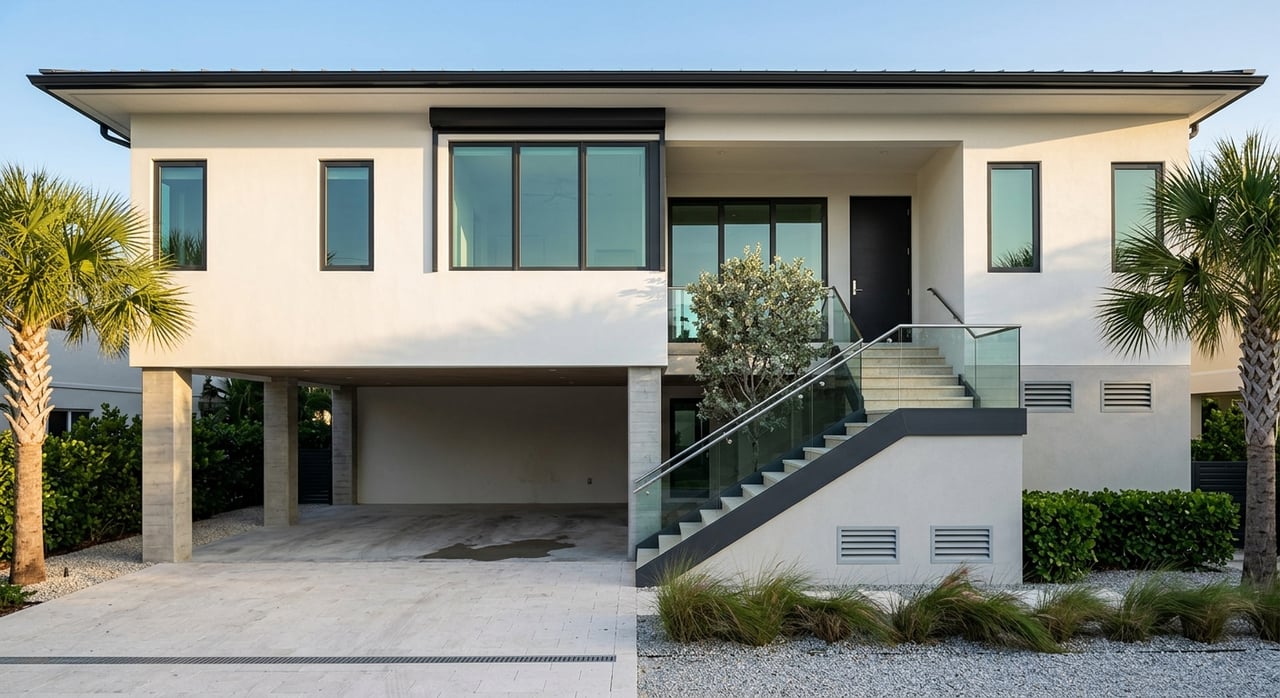
In practical terms, elevation and building design matter. A higher first floor, elevated mechanical systems, flood openings, and more resilient foundation choices can lower risk and sometimes improve premium outcomes.
Why elevation matters so much
On Clearwater Beach, elevation can shape both insurability and carrying costs. That is why the city’s property-level map and any available elevation certificate deserve close review.
Florida consumer guidance notes that elevation certificates can help with policy rating and mitigation review. On a beach or waterfront property, even a modest elevation difference can influence flood exposure, lender requirements, and long-term ownership costs.
A local cost factor buyers should know
For Clearwater buyers, there is one local point worth noting. The city states that its Community Rating System program status improved to Class 5 effective October 1, 2024, which produces a 25% flood-insurance discount for residents in the city.
That can be a meaningful carrying-cost advantage. Still, the exact benefit depends on whether the property is inside the city’s CRS community and on the policy itself, so it should be confirmed with the insurance professional quoting the property.
Condo buyers need a second layer of review
If you are buying a condo on Clearwater Beach, flood and wind questions do not stop with the unit itself. You also need to understand what the association insures and what your own HO-6 policy must cover.
Florida consumer guidance says HO-6 policies generally cover personal property, certain interior building items, personal liability, and at least $2,000 of loss-assessment coverage, with a $250 cap on the loss-assessment deductible. The same guidance also notes that the association’s master policy cannot cover certain unit-level items such as floor coverings, appliances, cabinets, and window treatments.
That means you should review the HOA master policy, bylaws, and recent mitigation documentation before you buy. This is especially important on the beach, where damage to shared elements or lower-level building systems may affect owners even if your unit is on a higher floor.
Higher floors can still have exposure
A higher-floor condo may have lower direct flood risk inside the unit, but that does not remove all risk. FloodSmart notes that higher-floor units often have less direct flood exposure, yet shared systems and ground-level access areas can still be vulnerable.
Pinellas and Florida consumer guidance reinforce the same point. If lower levels, common mechanical systems, or shared structures are damaged, unit owners can still feel the impact through repairs, access issues, or assessments.
Do not overlook wind coverage
On Clearwater Beach, flood coverage is only part of the insurance picture. Florida’s natural disaster insurance guide explains that residential policies generally must include windstorm coverage, though limited coastal exceptions can apply, and most lenders require wind coverage when there is a mortgage.
You should also pay close attention to the hurricane deductible. Florida homeowners policies commonly carry a separate hurricane deductible of 2%, 5%, or 10% of dwelling coverage, and that amount can materially affect your out-of-pocket exposure after a storm.
Mitigation features can help
Wind-mitigation features may reduce premium costs when they are properly documented. Florida’s mitigation discount guidance highlights features such as:
- Roof covering
- Roof-deck attachment
- Roof-to-wall connections
- Hip roofs
- Shutters or other opening protection
- Secondary water resistance
For eligible condo associations within 15 miles of the coast, the My Safe Florida Condo program may offer a free mitigation inspection. If improvements are made and documented, those reports can then be submitted to the insurer for possible credits.
A smart due-diligence checklist
If you are considering a Clearwater Beach purchase, these are the key steps to take before you remove contingencies:
- Verify the exact FEMA flood zone for the property, including whether it is in an SFHA, Coastal A Zone, or V zone.
- Check the Base Flood Elevation and review any available elevation certificate through the city’s property tools.
- Confirm map updates, since the City of Clearwater notes FEMA updated the coastal Pinellas FIRM in August 2021.
- Request flood and wind quotes early, since coverage timing and deductibles can affect your monthly budget and closing timeline.
- Compare replacement cost to NFIP limits, especially for luxury homes and high-value condos.
- Review condo documents carefully, including the HOA master policy, bylaws, and recent mitigation reports.
- Ask how building features affect premiums, including first-floor height, construction type, equipment placement, and mitigation details.
Why this matters for luxury buyers
On Clearwater Beach, insurance is not just a closing item. It is part of your investment analysis.
For higher-value properties, small differences in flood zone, elevation, design, and policy structure can have a noticeable effect on annual carrying costs. A careful review upfront helps you compare properties more accurately and avoid surprises after contract.
If you are evaluating waterfront homes or beachfront condos, a disciplined approach to flood and insurance due diligence can give you a clearer picture of value, risk, and long-term ownership strategy. If you want private guidance as you compare properties on Clearwater Beach, Greg Margliano can help you navigate the process with a measured, informed approach.
FAQs
What does a Clearwater Beach flood zone mean for homebuyers?
- A flood zone helps show a property’s flood risk and can affect insurance requirements, building standards, and monthly ownership costs.
What flood zones are considered high risk on Clearwater Beach?
- In Pinellas County, A and V zones are Special Flood Hazard Areas, and V zones are coastal high-hazard areas with wave action and fast-moving water.
Is flood insurance required for Clearwater Beach properties?
- Flood insurance is generally required when a property is in a high-risk A or V zone and the buyer is using a government-backed mortgage.
Does homeowners insurance cover flood damage in Florida?
- No. Standard homeowners insurance usually does not cover flood damage, so flood coverage is typically purchased through a separate policy.
How can you check a flood zone for a Clearwater Beach address?
- You can verify a property using the City of Clearwater flood and elevation tools and the Pinellas County Flood Map Service Center.
Do Clearwater Beach condos need flood insurance review too?
- Yes. Condo buyers should review both the association’s master policy and their own HO-6 policy because shared systems, common areas, and unit interiors may be covered differently.
Can properties outside high-risk flood zones still have flood claims?
- Yes. Pinellas County and FloodSmart both report that a meaningful share of flood claims occur outside high-risk flood zones.
What affects flood insurance premiums on Clearwater Beach?
- Premiums can be influenced by elevation, distance to water, flood frequency, foundation type, first-floor height, rebuild cost, and where building systems like HVAC and electrical equipment are located.