Beach Park residents are about to spend a Thursday evening in September watching Tampa City Council decide the fate of an 11-story building most of them can already picture from their driveways. According to FOX 13 News, the Beach Park Preservation Society has gathered close to 200 signatures on a petition, ordered matching "Downsize 5600 Mariner" shirts, and is organizing a turnout for the Sept. 10 public hearing at 5 p.m. The proposal has prompted questions about its scale and fit with the surrounding streets.
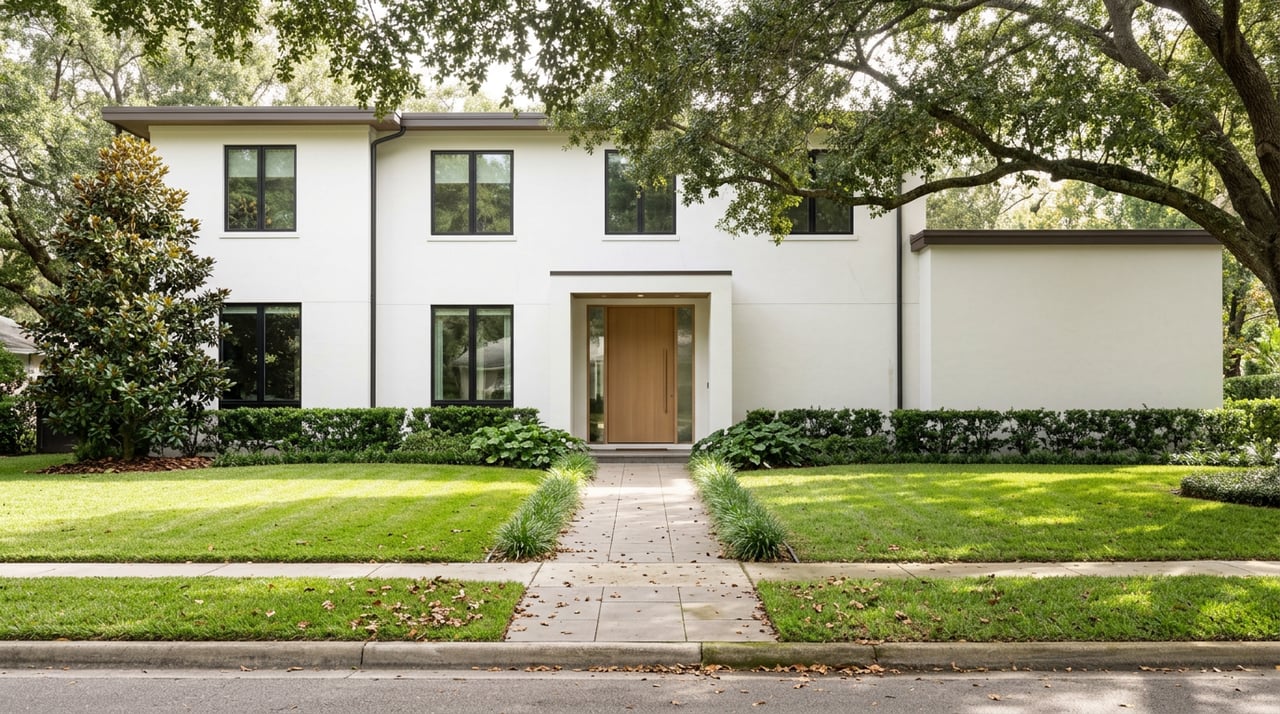
Beach Park was platted in the 1920s as a collection of Mediterranean-style estates on winding streets shaded by oak canopy, built on land that was once tropical brush and pine forest along Old Tampa Bay, according to the City of Tampa's own neighborhood page. That low-rise, large-lot character is exactly why an 11-story building reads as jarring here in a way it wouldn't in Westshore proper, a quarter mile away. But the character argument only tells part of the story. The more interesting question is why this specific proposal, on this specific street, is the one drawing shirts and petitions.
What's Actually Proposed at 5600 Mariner Street
Charlotte-based developer Northwood Ravin wants to demolish an aging office park at 5600 Mariner Street and replace it with an 11-story, mixed-use building carrying roughly 280 residential units and 6,000 square feet of office space. The site currently belongs to Dr. Kiran and Dr. Pallavi Patel, who have owned the office property for years. Northwood Ravin says it has hired traffic and engineering consultants to study the project's impact on surrounding streets, and that any required road upgrades will be worked out through Tampa's standard development review process.
That's the part every outlet covering this story has reported. The site's earlier development debates also provide context for the current proposal.
A Familiar Name on This Particular Site
The Patel family's office property at 5600 Mariner isn't a fresh entry into Beach Park's development conversation. According to Tampa Bay Business Journal reporting picked up by Hoodline, the Patels and their family foundation have already been central figures in earlier Beach Park development debates, tied to prior concept plans and the neighborhood pushback that came with them. This proposal is a continuation of a relationship between this particular site and this particular neighborhood, not a first encounter.
That context matters for how residents should read the current hearing. A generic apartment proposal on an anonymous parcel is one kind of fight. A proposal on a site connected to earlier development debates is a different and more specific kind of fight. The Beach Park Preservation Society's argument, at least as reported, isn't anti-growth in the abstract. Community members have specifically said they don't oppose new construction, only that this particular building is too large for these particular streets.
The Traffic Argument Has a Timing Problem
Resident Rocky Shirey gave local reporters the clearest version of the practical objection: the area is still recovering from the 2024 hurricane season, and adding hundreds of new residents means more cut-through traffic on streets that are already strained. That argument lands differently depending on when you hear it. Hillsborough County commissioners approved $70 million in stormwater and infrastructure funding in the wake of the 2024 storms, covering drainage improvements, pump stations, and wastewater upgrades across multiple communities, though that funding was directed at areas like Seffner, the University area, and Town 'n' Country rather than Beach Park specifically. The point residents are making isn't that Beach Park's infrastructure failed in 2024. It's that a neighborhood mid-recovery is a harder place to absorb an unrelated spike in daily traffic, whatever the county is doing elsewhere.
Northwood Ravin's response is that traffic and engineering consultants are already studying the impact and that any road upgrades will run through the city's standard review. Whether it satisfies the council on Sept. 10 is a separate question from whether it satisfies the neighbors who'll be driving those streets in year two of the building's lease-up.
What Actually Happens on September 10
Tampa City Council will consider the 5600 Mariner Street proposal at a public meeting on Sept. 10 at 5 p.m. This is not a rubber stamp. It's the point in Tampa's development review process where residents get direct floor time, and where a well-organized ask, in this case a specific height reduction rather than a blanket rejection, tends to carry more weight with council members than general opposition does. The Beach Park Preservation Society's approach so far, petition signatures tied to a specific number of stories rather than to the concept of housing itself, reflects an understanding of that dynamic.
Whatever council decides, the Sept. 10 hearing will address the proposal at 5600 Mariner Street. The decision will shape what happens next for the site and its neighbors.
If you're weighing what a project like this could mean for property values, insurance conversations, or the long-term character of a street you've lived on for years, that's exactly the kind of question worth a direct conversation rather than a guess. Greg Margliano and the Margliano Team follow zoning and development activity across Bayshore and South Tampa as part of daily work in these neighborhoods, and are available for a private market consultation whenever you want a straight read on how a specific proposal might affect your specific block.
This article is general information, not legal, tax or financial advice. Consult a qualified professional about your situation.